
DataDom modular data center
MODELS AND CONFIGURATIONS
Prefabricated infrastructures designed to evolve
DataDom modular data centers are designed to meet a concrete need: delivering reliable, scalable, and fast-to-deploy infrastructures without sacrificing design customization.
Each solution is prefabricated and developed through a co-design approach, where structure, systems, and IT infrastructure are designed together from the earliest stages, adapting to site geometry and installation constraints.
The result is a modular data center that is efficient from day one, capable of integrating into the available space and ready to evolve over time.

DataDom ONE
MODULAR DATA CENTERS UP TO 6 RACKS
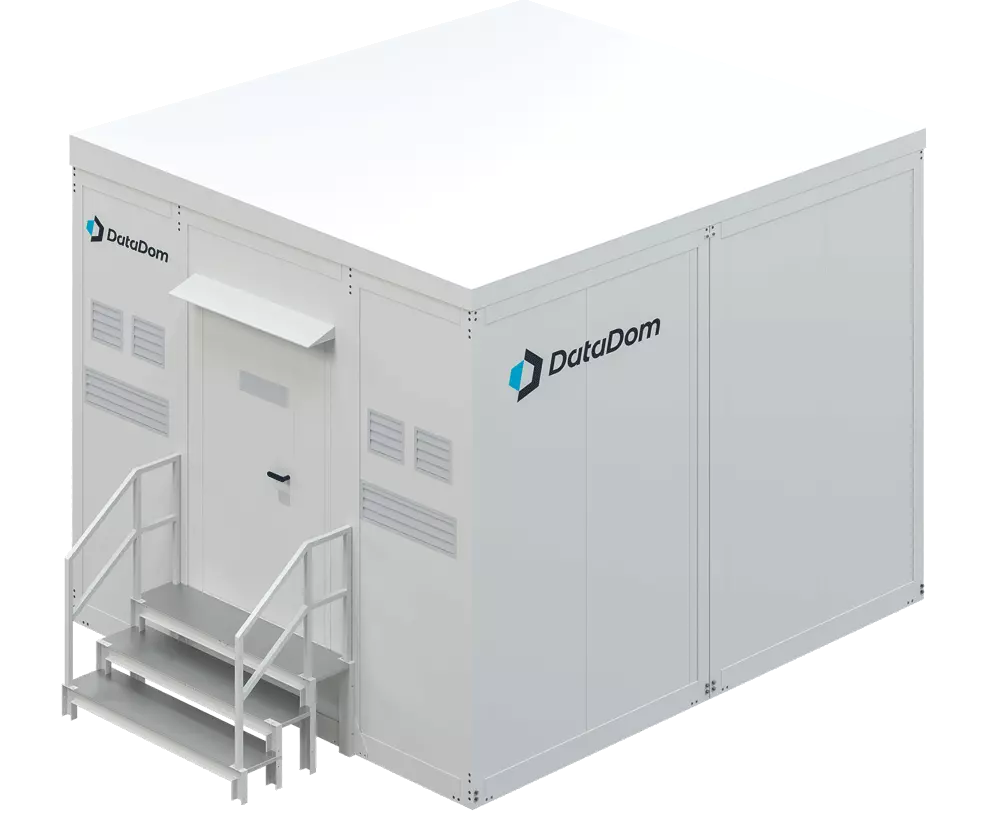
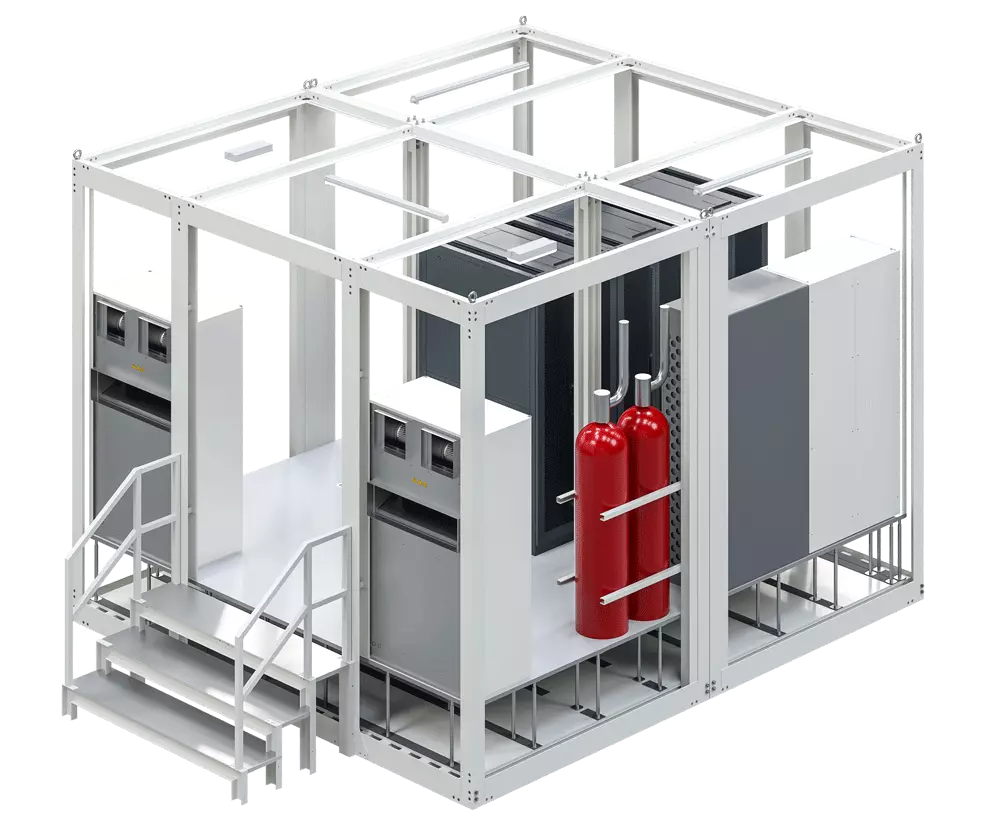
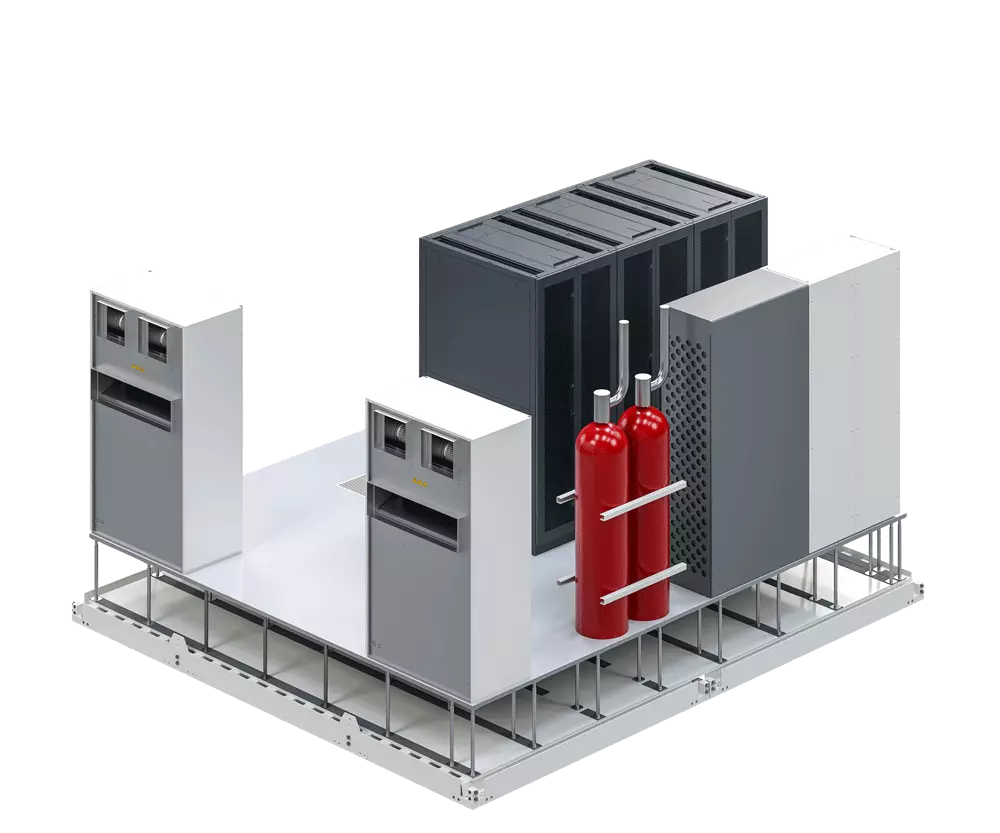
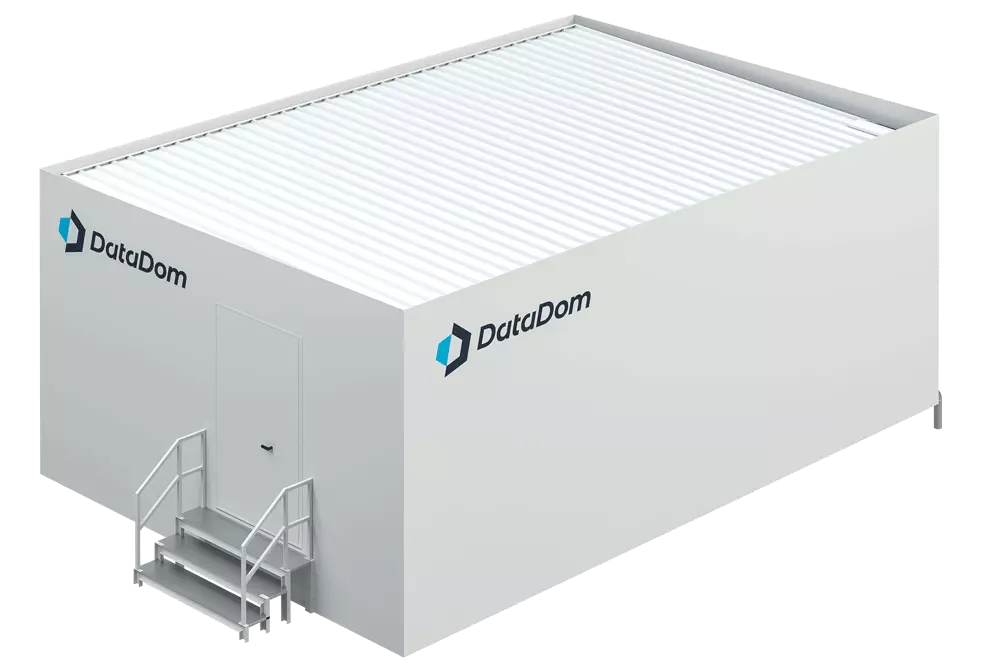
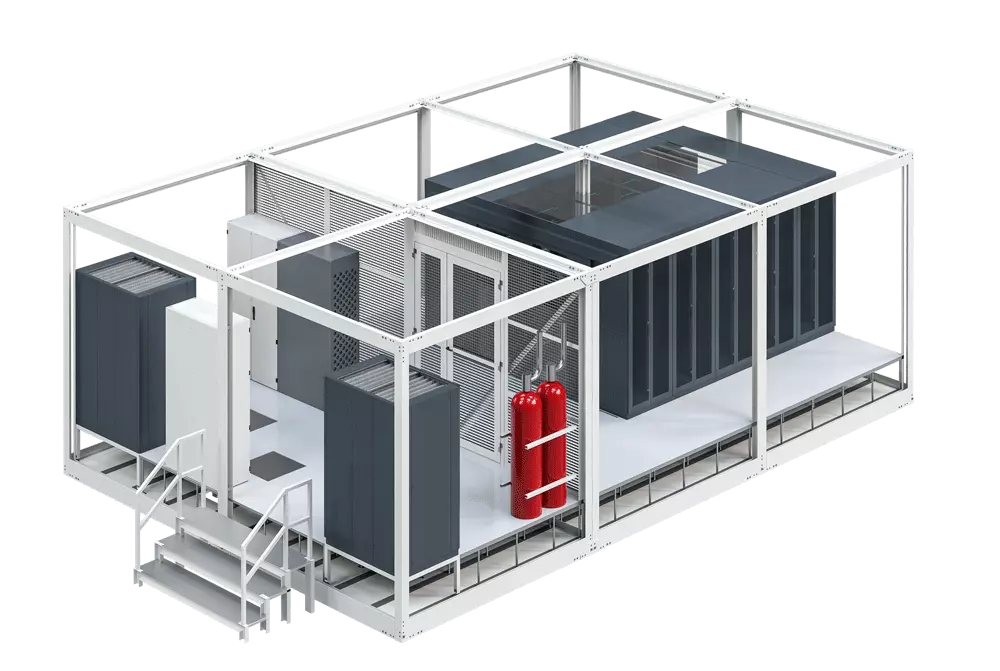
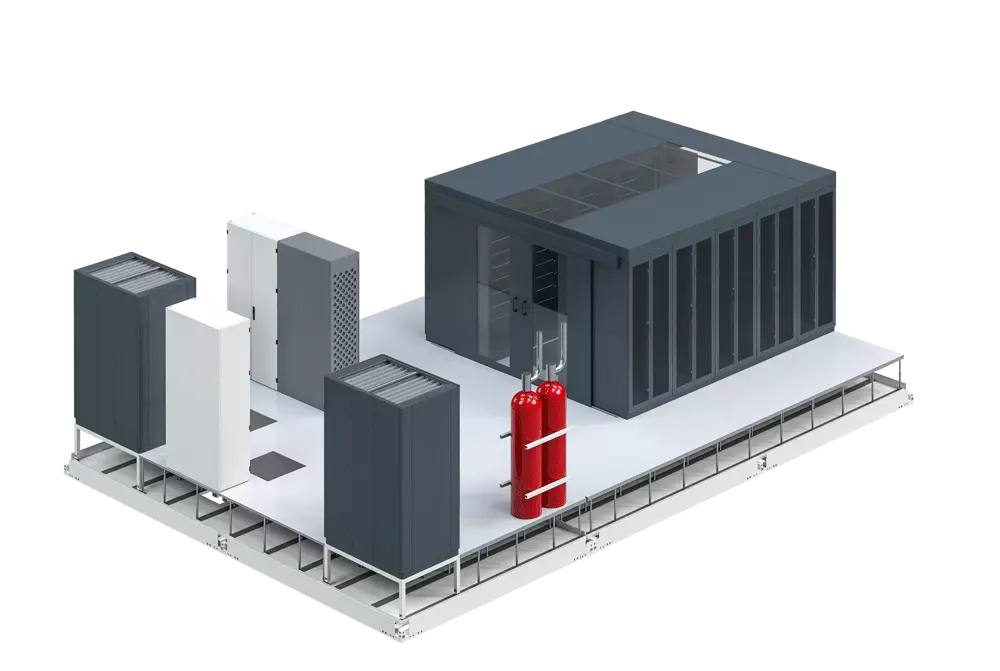
DataDom One is designed for small-scale applications where compactness, rapid installation, and control are key factors.
It can host up to 6 racks and is suitable for industrial environments, remote sites, or projects with limited infrastructure footprint.
However, a smaller number of racks does not mean lower computational capacity: DataDom One can also support high-density applications, where high IT power is concentrated in a few racks thanks to advanced cooling solutions, including liquid cooling. In this case, it is the compact design of the infrastructure—not the performance level—that defines this category.
KEY FEATURES:
DataDom PLUS
MODULAR DATA CENTERS FROM 7 TO 50 RACKS
DataDom Plus represents the core of the DataDom offering.
It is designed for modular data centers ranging from 7 to 50 racks, engineered from the outset to grow over time.
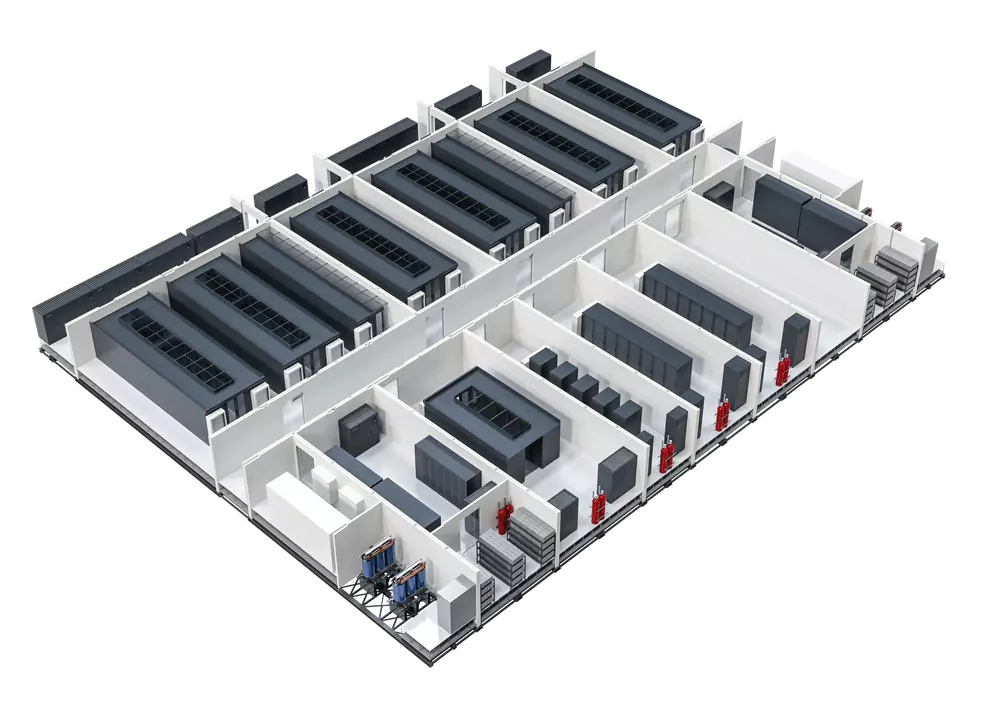
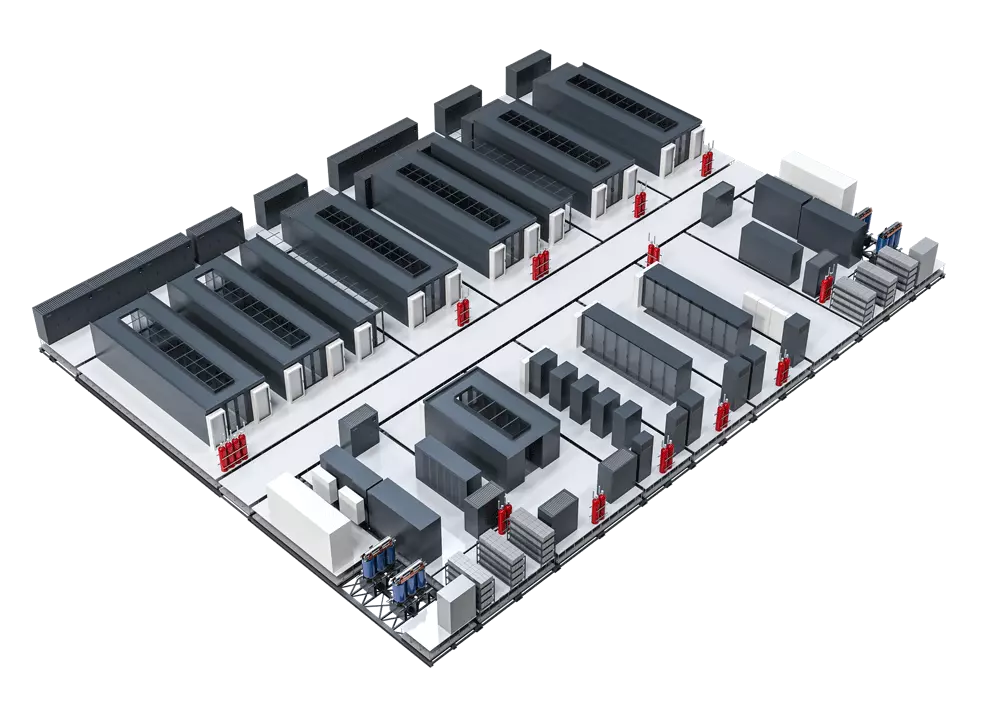
The solution consists of multiple modules and interconnected functional areas with different intended uses, such as IT halls, UPS rooms, cooling rooms, and dedicated technical spaces.
This architecture allows the data center to be deployed in progressive phases, scaling modules, power capacity, and redundancy as operational requirements evolve.
KEY FEATURES:
DataDom SCALE
MODULAR DATA CENTERS OVER 50 RACKS
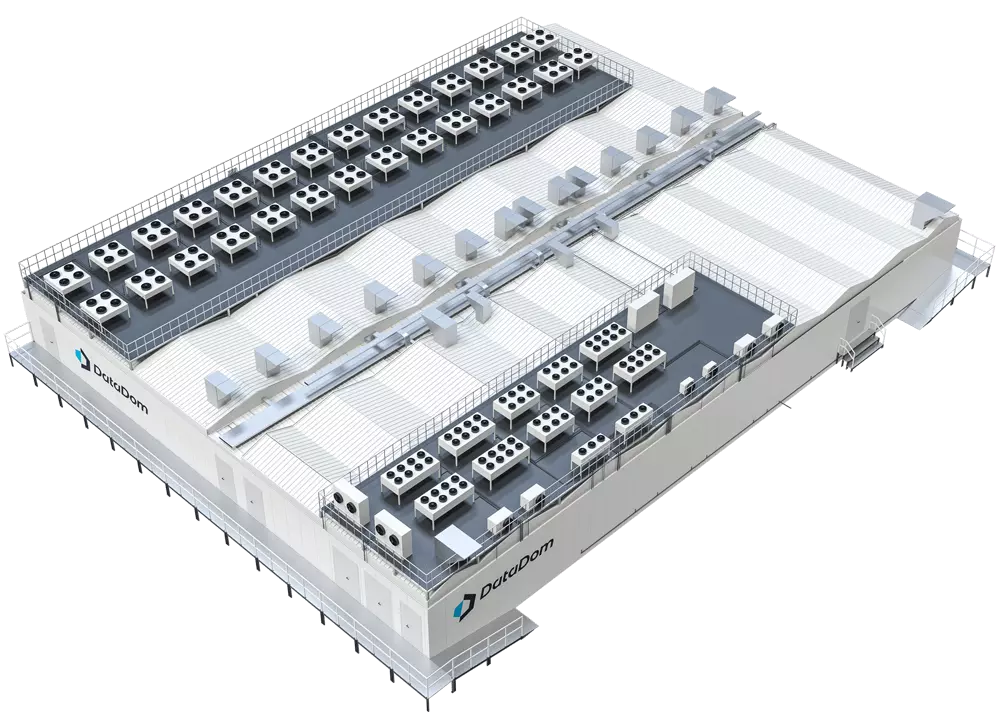
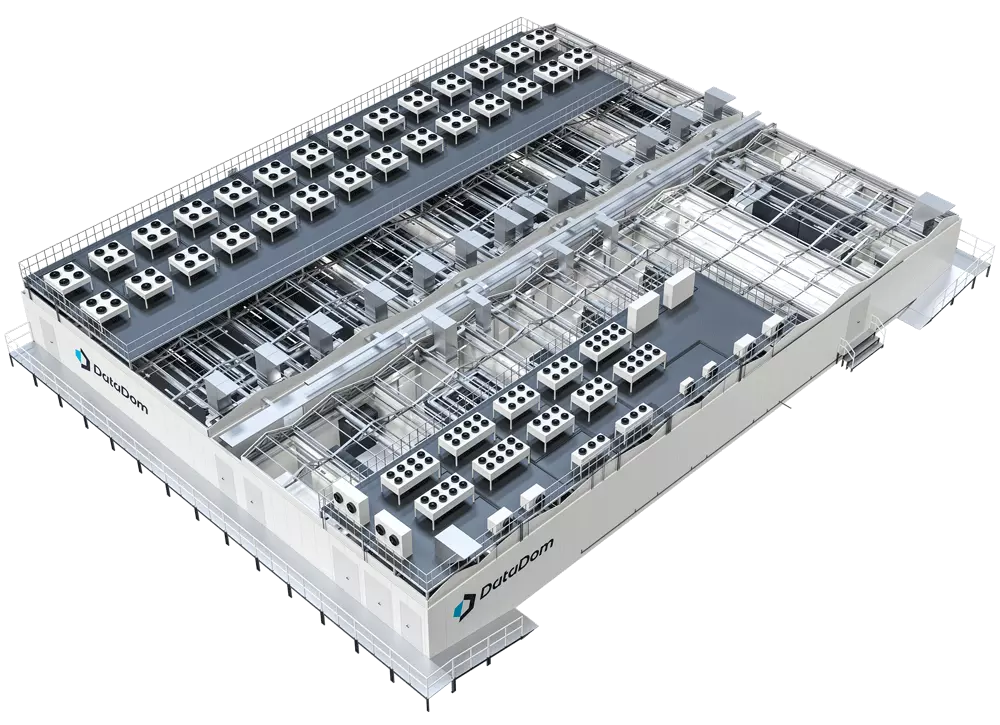
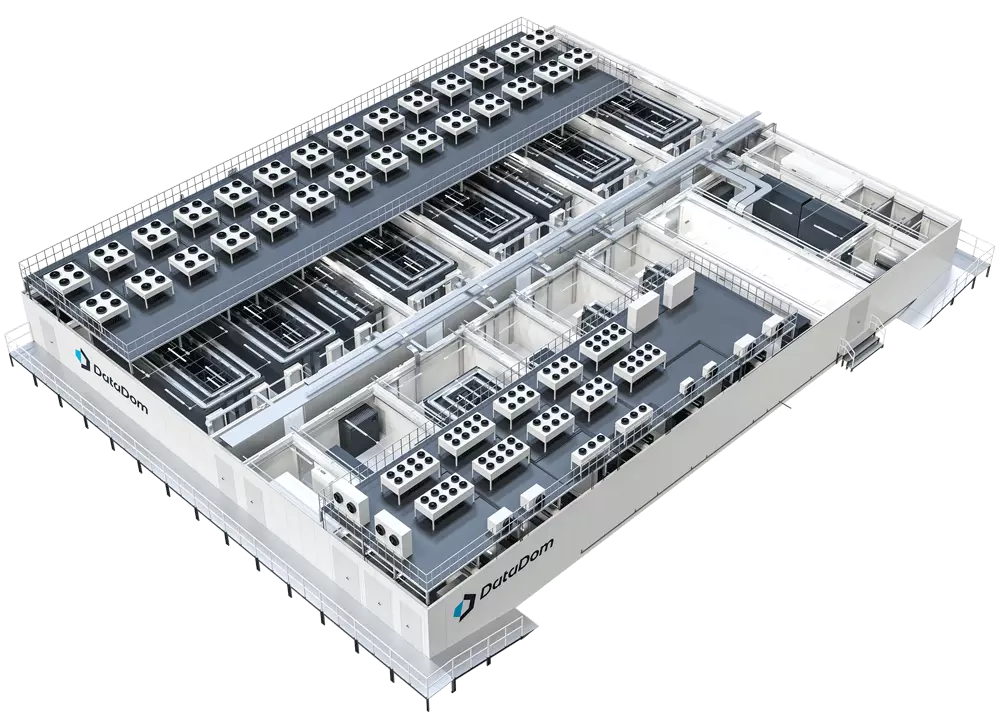
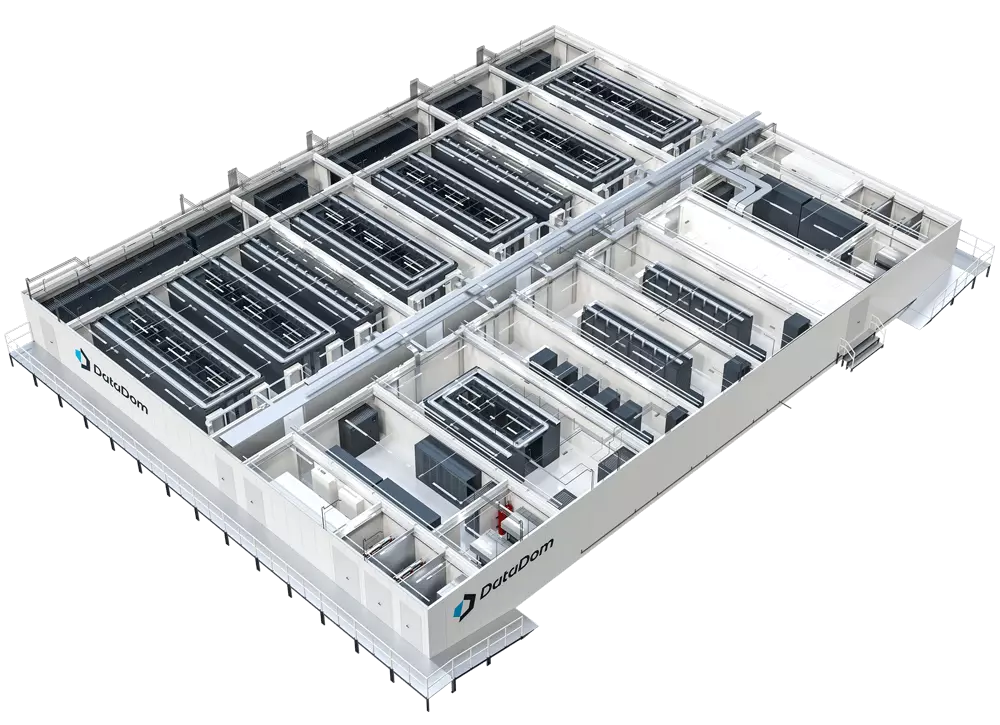
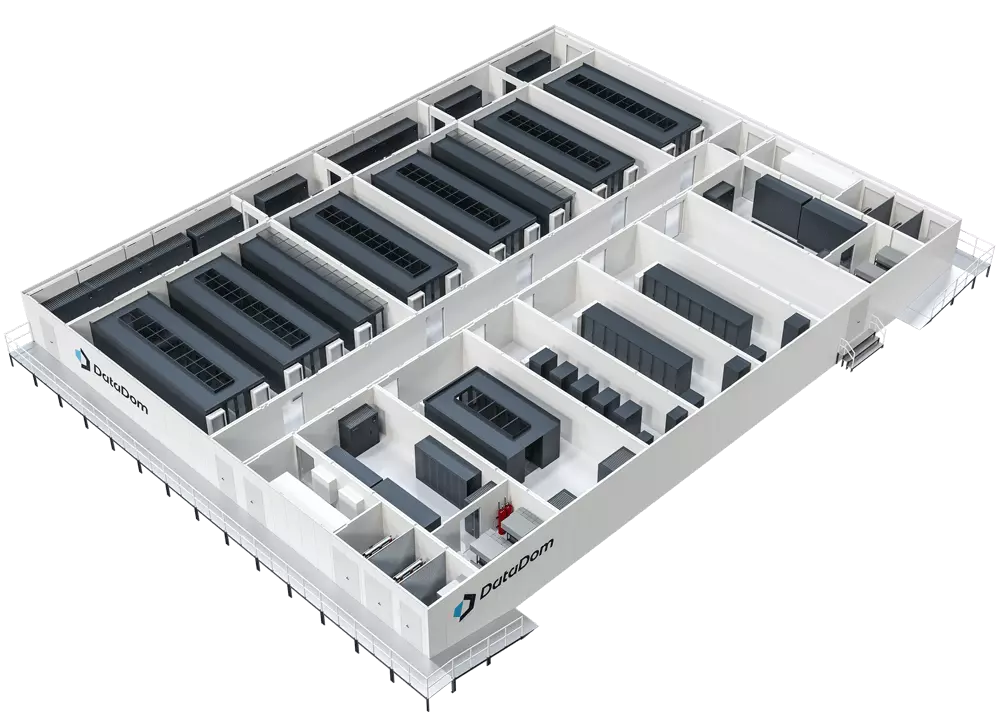
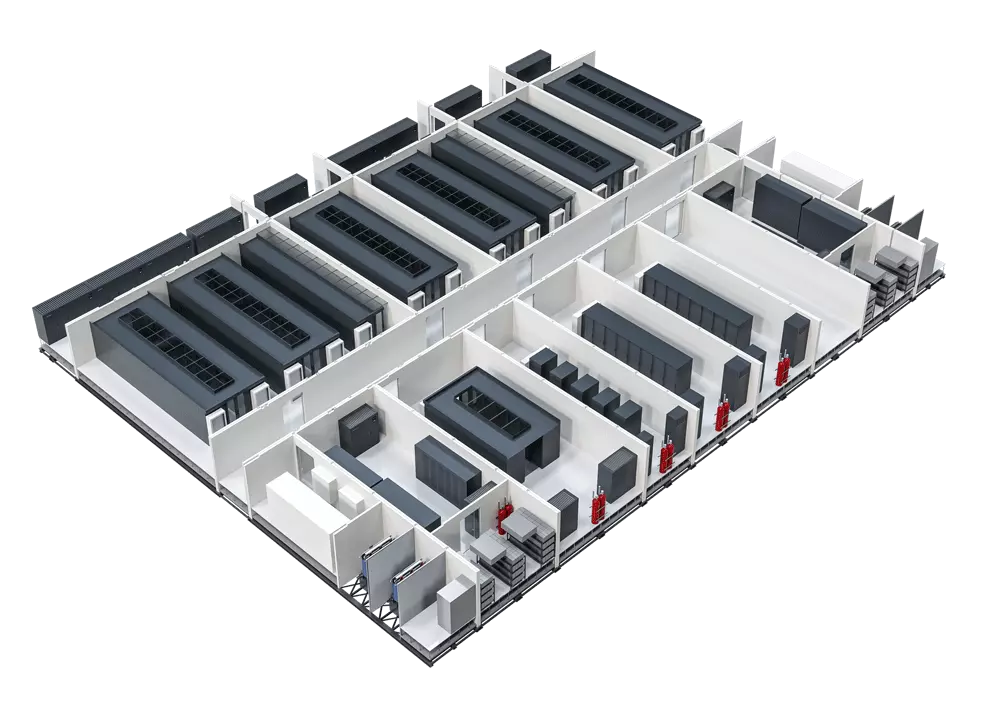
DataDom Scale is designed for large-scale infrastructures, with more than 50 racks and high IT loads.
These are modular data centers made up of multiple prefabricated modules and several separate rooms, each optimized for a specific function.
In these projects, modularity becomes a strategic tool for managing complexity, resilience, and operational continuity.
KEY FEATURES:
DataDom HPC
LIQUID COOLING FOR HIGH-DENSITY DATA CENTERS
DataDom HPC is the design configuration dedicated to data centers requiring high power density per rack, regardless of the overall size of the infrastructure.
It can be applied to DataDom One, Plus, or Scale solutions, integrating liquid cooling systems within a prefabricated modular architecture.
Liquid cooling technology enables the management of concentrated IT loads and ensures greater operational stability in high-computational-intensity scenarios, such as AI applications, HPC, and high-performance environments.
KEY FEATURES:
Modular IT infrastructure
Flexible solutions, even without a complete data center
It is not always necessary to build a complete data center. Depending on project requirements, DataDom can also deliver individual IT infrastructure components, integrating them into existing environments or already operational architectures.
This makes it possible to intervene in a targeted way, improving performance, organization, and control of the IT environment without constraints tied to delivering the entire infrastructure.
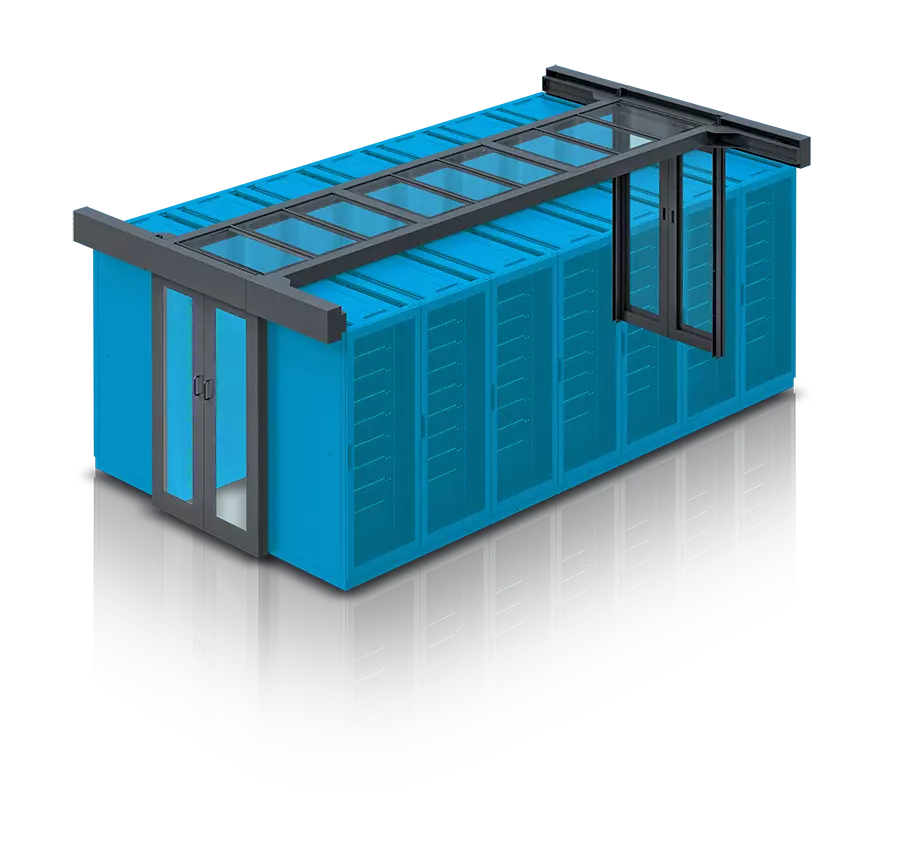
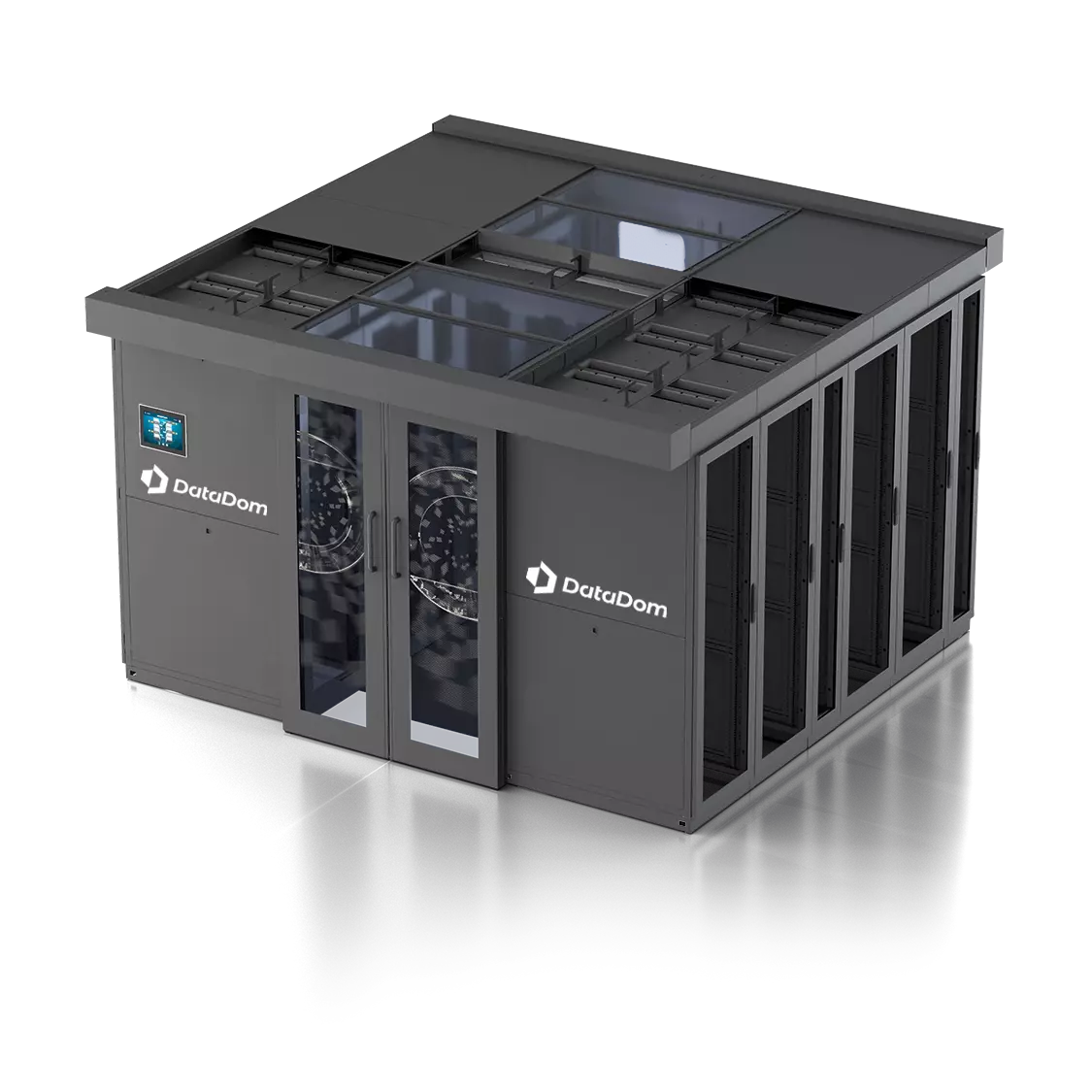
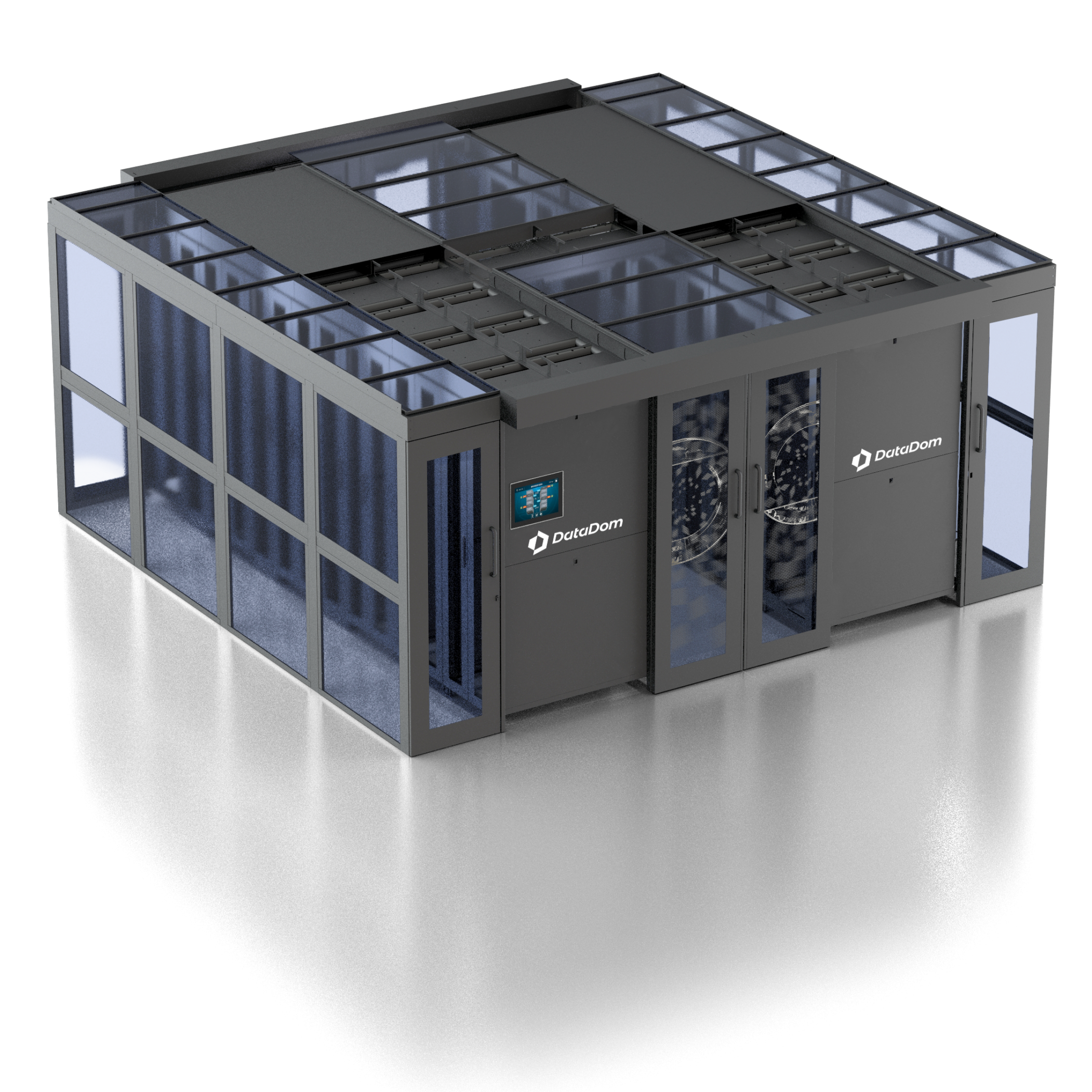
DataDom provides modular racks that are easy to assemble and adaptable to different configurations, designed to support various front and rear enclosure options to meet different requirements for cooling, security, and accessibility.
Alongside the racks, containment systems are available, designed to optimize airflow management and overall IT infrastructure efficiency.

Integrated technologies and components
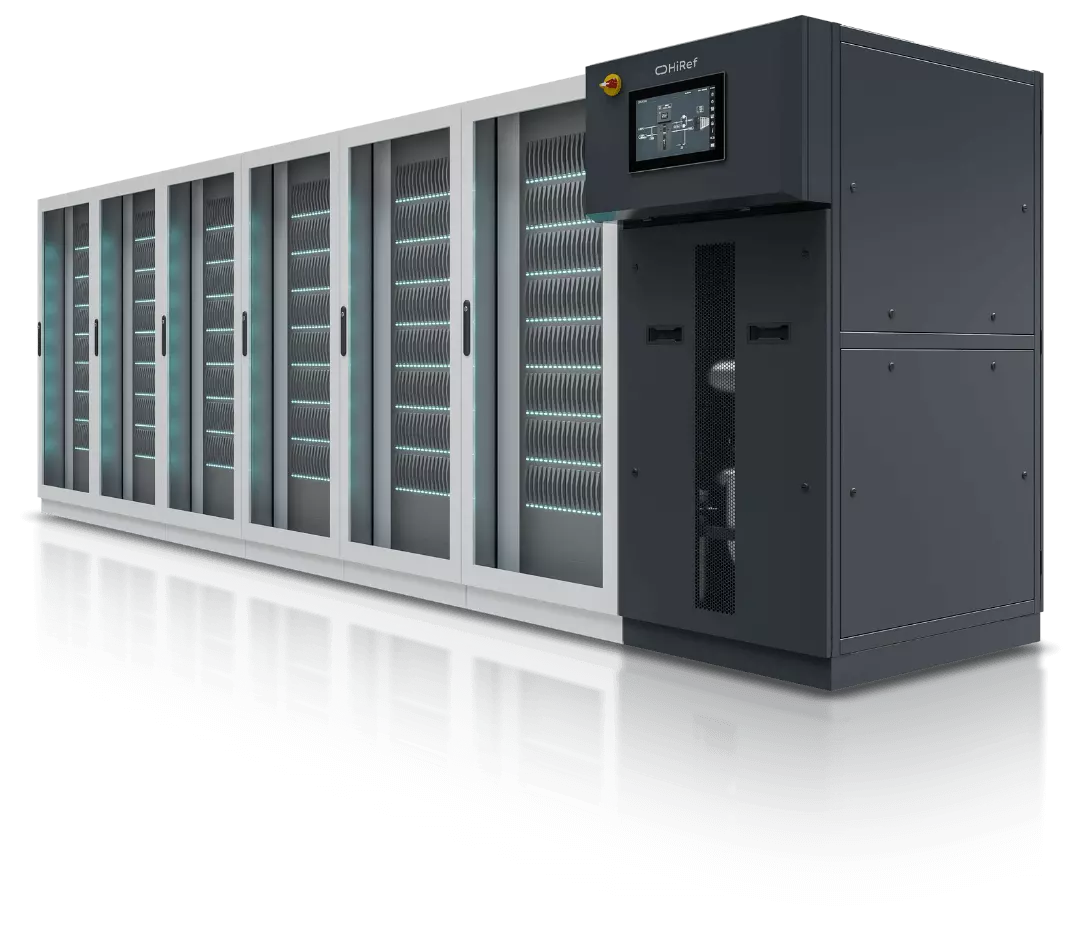
Each DataDom data center is built as a coherent system, where structure, systems, and technological infrastructure work together.
Technologies and components are selected and integrated based on project requirements, ensuring reliability, efficiency, and operational continuity both today and over time.